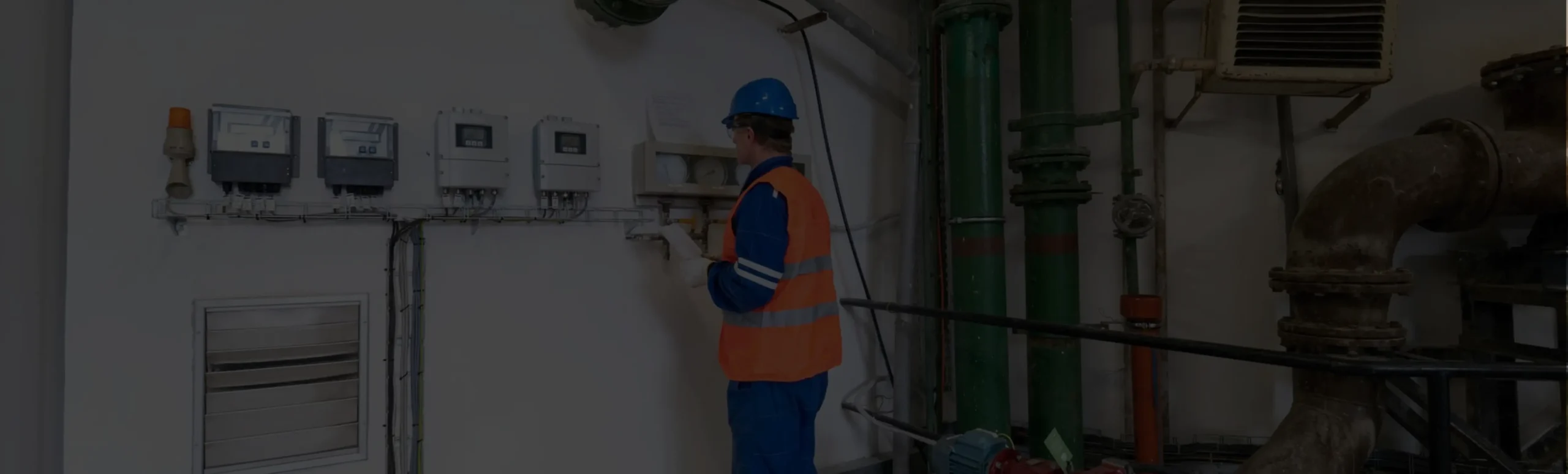
SEACPL solves industrial utility problems by analysing the complete operating circuit from inputs to generation, distribution, end use, recovery, and control not isolated machines.
This system-level approach prevents fuel loss, instability, and audit issues before they surface.
In most plants, utility issues are addressed in silos:
Illustrative system flow showing how utilities operate as a complete circuit — from input conditions to generation, distribution, end use, recovery, and control. Most utility problems emerge when one link drifts, even though individual equipment appears healthy.
Our approach mirrors how utilities actually behave in real plants:

We begin by mapping how the utility actually flows through the plant:
Execution fails when responsibility fragments.
SEACPL ensures:
Utilities do not remain efficient on their own.
Our support philosophy focuses on:
SEACPL’s system-level approach is shaped by Jaydip Gandhi, a business leader and engineer with over 32 years of experience across steam systems, industrial utilities, OEM leadership, manufacturing, and plant operations.
His advisory role focuses on helping leadership teams make technically defensible, long-term utility decisions, with SEACPL acting as the execution arm where implementation is required.

SEACPL works with proven OEM partners including:
OEMs provide reliable equipment.
SEACPL ensures the entire utility circuit works as one system.
Patterns observed across real plants
Many recurring system failures — efficiency drift, hidden losses, instability — are documented in the Steam & Utility Insights section.
These insights reflect what happens when system discipline weakens over time.
Explore Steam & Utility Insights

A short review costs nothing. Getting it wrong costs for years.
Complimentary review (typically part of a ₹10,000+ diagnostic exercise)

At Shreejiinc Engineering And Consultancy, we’ve been building strong relationships with clients across India for over a decade.


 +91 7798985580
 jgandhi@shreejiinc.co.in
Shed No – 60 Gajanand Inc Hub- 2 Behind Metrics Plaza, Ahmedabad, Gujarat – 382445, India
 U29299GJ2022PTC130700